
Meet our partners: Jason Edgar
Industry -
TAL’s partner community brings together leaders from across the superannuation sector. This month we speak with Jason Edgar, Head of Asia-Pacific from Russell Investments, about his path from politics to financial services, the trends shaping wealth and retirement across the region, and the opportunity to build stronger value propositions for members.
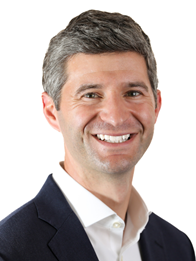
Your career takes a fascinating turn from the US House of Representatives on Capitol Hill to corporate strategy and M&A across Asia, and now leading Russell Investments across the APAC region. Looking back, did you deliberately seek out a pivot into corporate, or did navigating the world of US politics naturally prepare you for the complexities of the global institutional markets in ways people might not expect?
It’s fair to say my path is non-traditional and has benefited from a mix of deliberate choices and lucky breaks. My work in the U.S. Congress spanned the Global Financial Crisis and the expansion of trade with Asian markets. It was awesome ‘learning by doing’ and having a chance to be a small part of shaping some landmark laws. (That’s not to say I was ever out of central casting for shows like the West Wing, but I’ll confess to carrying the hip holster BlackBerry, which was not my best look).
It gave me a lot of exposure to how policy and regulation impact some of the world’s largest companies. And so I went to work for one, a global insurer, that was both grappling with the regulatory aftermath of the GFC and had acquired a large Asia business because of it. I spent most of the next decade with them in Hong Kong helping grow and reshape the portfolio they bought.
The more time passes, the more I see how jobs that seemed distinct have far more in common than I thought. Getting legislation passed in Congress and acquiring a company require the same core skill of building consensus from disparate interests. Both politics and M&A attract intensely competitive personalities, but those who succeed do so in teams that work hard together.
As Head of Asia-Pacific, you oversee markets as diverse as Japan, Korea, China, Australia and New Zealand. What are the macro trends currently shaping the wealth management landscape in the APAC region that is keeping you most energised?
Russell Investments holds a unique position as a global investment manager that also operates your own super fund through a Master Trust. How does sitting on both sides, managing institutional portfolios globally while serving members directly, allow you to set yourself apart from traditional super funds?
We see a real advantage in deploying the scale and capabilities of a $575B global asset manager to benefit the members, super funds and corporate plans we serve in Australia, I imagine similar to how Daiichi’s vast resources support TAL locally. The expertise built from decades of designing solutions for many different clients in different regions with different objectives provides us with a level of insight into managing assets you can’t get operating within a single market.
Our implementation platform (transitions, overlays, currency hedging, systematic strategies and EPI) maximises the efficiency of clients’ investment strategies and sets us apart from every other superannuation provider in the market. And our core global manager research capability, which today covers more than 16,000 managers across nearly every asset class and geography, allows us to source best-of-anywhere solutions to meet bespoke client needs. It’s a major differentiator from traditional super funds that are only recently setting up satellite offices overseas.
We spoke earlier about systemic risk regulation, something APRA and ASIC are now taking a close look at. I’d add that in a stress scenario, the super funds that only have internal capabilities, or are relying on the same few interconnected local providers, will have a harder time acting swiftly and effectively than funds that employ external managers and platforms. It’s a matter of good governance and system readiness that I’d encourage all fund executives and trustees to assess.
Insurance within super delivers significant value to members. As funds continue to focus on strengthening their value proposition, where do you see the biggest opportunities for the insurance industry to evolve and enhance member outcomes?
We appreciate our longstanding partnership with TAL in Australia to serve our superannuation members, as well as the close work with your parent company Daiichi Life in Japan.
Russell Investments’ start in super came from serving many leading corporate plans, which we still do today. We look at superannuation as an overall employee value proposition that helps employers retain and recruit great talent. Insurance is a significant component of it. We like to show clients the overall value for money their employees or members get from picking us, for example, the investment returns, advice, member services and quality insurance cover they get for all-in fees of ~$1,200 per year.
Well priced, quality coverage that is appropriately tailored to plan participants is a big part of our proposition. And so is the ability of our insurance partner to deliver a great claims experience, especially at those times a member needs support most.
Getting dynamically priced, specialised group insurance is a big opportunity for insurers serving super funds. The insurer that can effectively underwrite and build affordable cover for some of Australia’s largest workforces with specialty needs, like the resources sector, will be primed to do well in super and group benefits more broadly. The underwriting opportunity is where I would encourage insurers to point artificial intelligence investments in the near-term.
Russell Investments iQ Super Employer has been recognised as a finalist in the Chant West category, Corporate Solutions Fund of the Year awards in 2023, 2024, 2025 and 2026. Given the competitive nature of corporate tenders, what do you think sets Russell Investments iQ Super Employer apart, and where could partners like TAL play a greater role in strengthening the overall value proposition for employers?
It’s a real point of pride for our team. First, we’re delivering top quartile investment performance on a 1, 3 and 5-year basis and consistent double digit returns for members. Growing their super balances is our foremost priority. What sets us apart are all of the additional services and support we wrap around it at great value for members. That includes the pairing of personalised advice and age-appropriate investment options, so we help members really manage their super in a way that sets them up for the great life they want after work. That includes quality insurance. And it is all complemented by a dedicated, high-touch team of account managers singularly focused on our participating employers.
Australia is the envy of many in the world for the accumulation system it’s built. The clear and present challenge for super funds is getting the decumulation side right. TAL’s early market leadership in developing retirement income solutions is commendable, and I think you are well placed to be a significant contributor to how the industry addresses the retirement challenge.
In the AFR article “The ‘super’ shifts that can redefine retirement” you highlighted that adopting suitable, age-based investment strategies could make MySuper balances $46 billion dollars better off. In your view, what are the main barriers to the wider super industry embracing this shift?
In large parts of the system today, super is still treated as one-size-fits-all. It’s a commodity that places many Australians into default investment options that are static and fail to account for individual needs and what’s required to sustain a great life after work. Today, less than one-third of MySuper accounts in Australia are invested in age-based strategies.
Greater awareness of the importance of age-based strategies is key and can fuel growing demand for a better way.
There is also an opportunity for small- and mid-sized super funds to lead the way here. These funds have come up serving distinct segments of our community and resisted being absorbed into ‘Big Super’. They know their members better and are of a size to take on investment option changes faster, with the right support. Adopting personalised, age-based strategies can help more of these funds evolve and be in stronger, enduring positions to serve their members well into the future.
Following the recent 2026-2027 Federal Budget announcement to CGT and tax reforms, what do you foresee are the biggest shifts in superannuation and retirement ecosystem over the next few years?
While policy changes can influence investment preferences and asset allocation decisions, we anticipate several key shifts will occur across the superannuation system independent of the reforms.
The most significant structural change will be the continued evolution of superannuation from a wealth accumulation vehicle into a retirement income system. This represents a fundamental shift in focus from simply maximising investment balances during the accumulation phase to achieving better retirement outcomes for members. As this transition accelerates, the demand for more personalised advice, guidance and retirement solutions is likely to increase, reflecting the fact that retirement needs are highly individual and depend on factors such as longevity, spending requirements, health, family circumstances and risk preferences.
Technology will play an increasingly key role in enabling this shift. Advances in artificial intelligence, digital advice platforms and more sophisticated forms of robo-advice will create opportunities to deliver scalable, personalised solutions that help individuals make better retirement decisions.
However, the challenge for the industry will be balancing automation and efficiency with the need for trust, behavioural support and more complex advice where required.