
ASFA: Building a safety net members can count on
Industry -
How can insurance in super continue to provide meaningful, affordable protection as members’ needs change? At this year’s ASFA Conference in Melbourne, TAL Group CEO and Managing Director Fiona Macgregor and AIA Australia CEO and Managing Director Damien Mu discussed earlier support, evolving benefit design and how funds and insurers can turn awareness of change into action. The session was chaired by Maree Pallisco, Partner at EY.
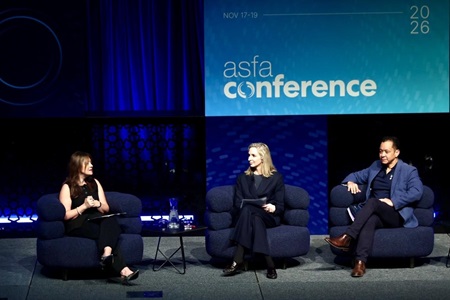
“This feels like a really important time,” Fiona said. A year after she and Damien first discussed the need for a more modern and relevant insurance-in-super safety net, she said the challenge had become even more pressing as Australian lives, expectations and needs continue to change.
Why early matters
Fiona drew her remarks together around one idea: “Early. Early conversations, early support, early planning.”
She framed it through three themes, starting with recovery. Changing claims experience, she said, is providing important signals about what is happening in the community and reinforcing the case for earlier support, where possible, to help members return to health, life and work.
On sustainability, Fiona acknowledged what she described as significant repricing across the industry this year. In her view, premium increases alone cannot address the underlying challenges; innovation and product evolution are also needed to keep insurance relevant.
Turning to life beyond work, Fiona said TAL was increasingly thinking about longevity risk alongside life risk. She linked this focus to the millions of Australians approaching retirement.
From TPD to disability insurance
Asked whether income protection could play a greater role in super, including potentially as part of default cover, Damien suggested approaching the question through disability insurance more broadly, rather than as a choice between TPD and income protection. As a design option, he suggested combining shorter income-style benefits with more moderate lump sums to better suit different member circumstances.
Fiona saw merit in considering benefit design through the lens of recovery, while stressing the importance of retaining protection for members who will permanently leave the workforce. In her view, an income-led design places greater emphasis on the potential for recovery, an approach she regarded as right, important and sustainable at a time when the country is thinking about productivity.
On mental health claims, Fiona acknowledged the complexity of assessing permanence and the challenges this can create for someone experiencing mental ill health. In discussing benefit design, she cautioned against separating mental and physical conditions within a national safety net and favoured benefits designed to support recovery. She also saw a potential role for voluntary top-up cover for members seeking additional protection.
Damien described claims processes and assessors as having been built around acute disease. He contrasted that approach with members’ desire for certainty about the criteria against which their claims will be assessed.
Regulation, advice and affordability
On regulation, Fiona noted there remains some nervousness about how the obligations under the SIS Act are interpreted when funds and insurers design products more oriented towards recovery. In her view, greater clarity could give the sector confidence to innovate while preserving appropriate member protections.
She also pointed to advice and engagement. More members have been taking up additional voluntary cover, which she said strengthens the case for progressing Delivering Better Financial Outcomes reforms and the New Class of Adviser.
Damien urged funds to look beyond product and premium reviews and to test whether their insurer can support the whole member journey. “Be demanding of us. Make sure we can deliver for you."
On affordability, Fiona said conversations between funds and insurers were becoming deeper, with more and better discussions with partners than ever before. She said funds were examining claims experience in detail and reported that APRA was bringing funds and insurers together to discuss solutions.
The takeaway for funds: the relationship with insurers is broadening. Product and premium remain critical, but the conversation now needs to encompass claims experience, recovery, member engagement, technology and resilience.
The next 12 months
Looking to the next year, Fiona called for momentum on the New Class of Adviser. She warned that if a highly regulated sector moves too slowly, consumers may turn to generative AI for information and support. She also called for progress on sustainable product design, including building earlier support into the insurance offer. Damien echoed the call for earlier support for Australians experiencing injury and illness.
It brought the discussion back to Fiona’s opening theme: the need to think early about how the insurance-in-super safety net evolves. This means earlier conversations between funds and insurers, earlier support for members and earlier planning for change.